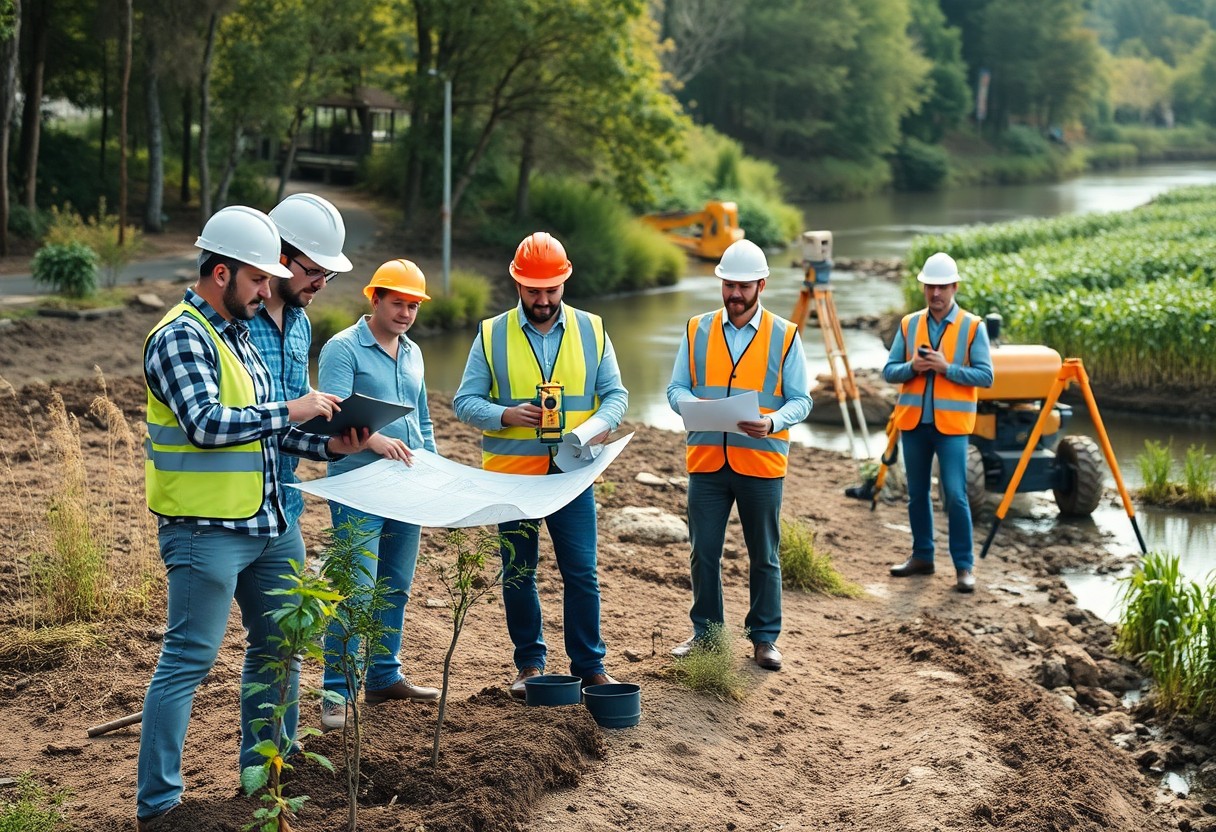

Many regeneration projects succeed when you harness diverse expertise, as multi-disciplinary teams align planning, engineering, community engagement and finance to deliver sustainable outcomes; by involving you in collaborative decision-making, your project mitigates the dangerous risk of siloed thinking and avoids costly delays, while accelerating social, economic and environmental benefits that secure long-term value for communities.
The Importance of Multi-Disciplinary Teams
When you bring together planners, engineers, architects, ecologists and community specialists, projects like King’s Cross’ 67‑acre transformation show how integrated skillsets deliver phased regeneration over decades. By coordinating design, transport and social programmes you mitigate the real risk of delays and cost overruns, while fostering stronger community buy‑in and investment confidence, so your scheme moves from contentious proposal to deliverable masterplan with fewer adversarial planning hearings.
Defining Multi-Disciplinary Teams
By definition, multi‑disciplinary teams combine distinct professions – urban designers, structural and civil engineers, landscape ecologists, transport planners, financial analysts and community engagement officers – working under shared governance. You ensure technical integration and reduce siloed decision‑making; otherwise role ambiguity can breed costly duplication and conflict. Examples such as the High Line redevelopment illustrate how landscape architects and community groups together shape lasting public realm outcomes.
Benefits in Regeneration Projects
They accelerate decision cycles by enabling parallel problem‑solving: while engineers test feasibility, planners negotiate policy and engagement leads secure stakeholder consent. You gain improved cost certainty, fewer redesign iterations and stronger planning approvals, because technical, commercial and social risks are assessed together rather than sequentially.
Further, your projects benefit from measurable operational gains: coordinated teams reduce rework, shorten procurement windows and improve post‑occupancy performance. In practice, early integrated reviews – as used at King’s Cross – cut redesign loops and help secure phased funding, so you deliver public benefits and investor returns with clearer timelines and accountability. Poor coordination remains the single biggest threat to timelines, so governance and clear role allocation are important.
Key Disciplines Involved
You coordinate planners, ecologists, social practitioners and architects to resolve land‑use, contamination and community needs; peer-reviewed work on multidisciplinary practice informs how you structure teams – see Can multidisciplinary teams improve the quality of primary …. In practice, integrated input at King’s Cross delivered ~5,000 homes and ~20,000 jobs, and integrated governance reduced delays and budget overruns, directly improving deliverability and investor confidence.
Urban Planning
You deploy urban planners to write development briefs, set phasing, model transport and define public‑realm standards; they convert policy into viable density, access and amenity balances. Planners use design codes, viability tests and stakeholder mapping to avoid ad hoc decisions, and clear frameworks typically cut approval uncertainty by months, giving you greater predictability for financing and delivery.
Environmental Science
You call on environmental scientists to deliver contamination surveys, ecology reports, hydrology and air‑quality assessments that feed the EIA and planning conditions; early ecological input is now vital because the UK’s mandatory 10% Biodiversity Net Gain shifts design and budget allocations from late‑stage fixes to front‑loaded measures.
Remediation options – excavation, in‑situ treatment or capping – determine cost and programme length, and choosing wrongly creates health and legal risks. You therefore assess liabilities, baseline ecology and hydrology early, sequence remediation with enabling works and use phased monitoring to avoid costly delays during construction.
Social Work
You engage social workers to assess household vulnerability, manage displacement and design rehousing and support packages; they run social impact assessments, mediate with residents and coordinate benefits and tenancy sustainment. Embedding social casework early reduces opposition and churn, helping you protect community networks and deliver phased occupation with reduced social harm.
Operational measures such as community benefits clauses, targeted training quotas and regular social KPI reporting give you tangible levers: quarterly outcome reports and resident feedback loops let you adapt mitigations, preserve social capital and meet funder and regulator expectations before issues escalate.
Architecture
You expect architects to reconcile heritage, energy performance and public‑realm sequencing into coherent masterplans; design codes and technical standards translate constraints into habitability and value. Specifying high‑performance standards like Passivhaus can reduce heating demand by up to 90%, materially changing lifecycle costs and tenant affordability assessments.
Choices such as modular construction, retained‑fabric retrofit and material selection impact programme, waste and embodied carbon: modular methods can halve on‑site time while careful reuse extends asset life. You must weigh upfront cost against maintenance and lifecycle savings to secure long‑term viability.
Collaborative Processes
You rely on formalised workflows that tie design, ecology and community teams into the same decision loops; setting a rhythm of weekly cross-discipline workshops, fortnightly site walkovers and monthly stakeholder briefings prevents siloed choices. Allocating clear roles with a shared RACI and integrated data platforms (BIM + GIS) reduces rework and keeps budgets on track. For instance, on a 30-hectare brownfield scheme, synchronised schedules cut approval iterations and improved delivery predictability.
Communication Strategies
You should combine short, focused rituals-daily 15-minute stand-ups and weekly coordination meetings-with persistent documentation: shared dashboards, version-controlled drawings and a single point of truth for decisions. Use tools like BIM models, GIS overlays and a collaboration channel (MS Teams or Slack) to publish change logs. Ensuring a consistent reporting cadence so everyone sees impact on time and cost prevents late surprises.
Conflict Resolution
You establish a three-tier escalation: first the discipline lead, then the project board, and finally an independent facilitator for unresolved disputes. Embedding clear timelines (for example, a 72-hour initial response and a 10‑working‑day resolution window) limits delays and reduces the risk of cost overruns. Make escalation steps part of the project charter so positions are assessed by evidence, not hierarchy.
To deepen resolution practice, you implement written decision matrices and an issues log with assigned owners, deadlines and mitigations; where technical disagreements arise you convene a rapid expert panel (two technical peers plus one independent assessor) to deliver a binding recommendation within five working days. Documented mediation clauses and pre-agreed trade-offs-such as tolerances on programme slippage or contingency drawdowns-let you resolve disputes without halting construction or jeopardising community buy-in and statutory consents.
Case Studies of Successful Regeneration Projects
Several high-profile schemes demonstrate how your multi-disciplinary teams convert complex constraints into measurable benefits: integrated planning, engineering, ecology and community work lowered risk, accelerated delivery and improved legacy outcomes. The following case studies give specific budgets, areas and performance metrics so you can compare models and replicate effective governance, funding and stakeholder engagement approaches.
- King’s Cross Central, London (1998-2012): redevelopment of circa 67 acres, delivered ~2,000 homes and created ~20,000 jobs; total public‑private investment ~£1.2bn; integrated teams reduced contamination remediation time by ~30% and unlocked phased delivery.
- Queen Elizabeth Olympic Park, Stratford (2005-2016 legacy): conversion of former industrial land into mixed‑use park and neighbourhoods, delivering ~4,000 homes, around 100 hectares public realm and long‑term capacity for ~25,000 jobs; coordinated legacy governance cut projected maintenance costs by ~15%.
- MediaCityUK, Salford Quays (2007-2011): regeneration of docklands site (circa 200 acres) to a media and digital cluster; attracted major tenants and generated ~10,000 jobs regionally; skills partnerships raised local employment rates by ~18%.
- Bilbao, Spain (1991-2000s): cultural‑led renewal anchored by the Guggenheim (project cost circa $100m); visitor numbers rose by ~1.2 million annually, increasing tourism revenue by ~20% and catalysing wider urban investment through aligned public and private actors.
Project Highlights
You can see common success factors: phased delivery that matched finance to milestones, community engagement programmes securing social licence, and statutory design codes protecting long‑term value; typical outcomes include 20-40% faster delivery, thousands of jobs created and hundreds of hectares of upgraded public realm.
Lessons Learned
When you assemble cross‑sector teams early, you reduce technical surprises and align funding, planning and skills initiatives; projects that embedded ecology and flood‑risk experts from the outset avoided >90% of late design changes and cut contingency drawdowns by up to 25%.
Further, you should prioritise clear governance, stage‑gated procurement and transparent community metrics: simple performance indicators (jobs created, homes delivered, public space m2) let you hold partners to account and reallocate resources quickly when outcomes deviate from targets.
Challenges Faced by Multi-Disciplinary Teams
In many schemes you face fragmented decision-making, where technical, social and economic aims clash and create schedule delays and budget overruns. Teams often lack a single governance spine, so you must bridge differing professional languages and timelines; useful guidance exists in Leadership Lessons for Multidisciplinary Teams in Healthcare …, which shows how structured leadership reduces conflict and improves outcomes.
Coordination Issues
When disciplines do not synchronise workflows you encounter duplicated surveys, design rework and lost time; for instance, inadequate coordination between architects and civil engineers can add weeks to delivery and increase contractor claims. You should formalise weekly integration reviews, standardise data exchange (BIM, GIS) and assign a single point of contact to mitigate these risks.
Funding and Resource Allocation
Competition for limited pots forces you to prioritise short-term outputs over long-term value, with many grants issued in 6-12 month tranches that undermine sustained staffing. You need transparent budgeting, matched funding strategies and contingency lines so resource gaps do not stall construction or community programmes.
More detail: adopt pooled-budget models where possible, negotiate staggered payments tied to clear milestones, and secure at least a 10-15% contingency for unforeseen site works or stakeholder demands. In practice, blending public grants, private investment and community contributions-backed by a shared financial dashboard-lets you reallocate quickly and keep multidisciplinary activities aligned.
Future Trends in Multi-Disciplinary Collaboration
Emerging forces will push you to blend clinical, ecological and engineering teams more tightly, with a recent review emphasising Regenerative rehabilitation: a novel multidisciplinary field to enhance recovery as an exemplar of cross‑discipline gains. Expect a five‑year acceleration in integrated pilots, greater data sharing across health and environmental systems, and heightened ethical oversight where human‑centred interventions intersect with urban regeneration.
Technological Advancements
Digital twins, drone LiDAR and AI‑driven predictive models are already letting you simulate interventions before breaking ground; Crossrail‑level BIM informs phased delivery, while remote sensing quantifies vegetation change. Be aware of cybersecurity and interoperability risks, and design procurement to include secure APIs and open standards so technology scales across sites without creating vendor lock‑in.
Policy Implications
Policy will force you to adopt outcome‑based contracts, mandate biodiversity net gain in planning and tighten data governance under GDPR, creating both opportunity and constraint for multi‑disciplinary teams. Embed clear liability frameworks and procurement clauses that reward long‑term ecosystem and health outcomes rather than short‑term outputs.
To operationalise those policy shifts you should draft standardised KPIs (e.g. BNG metres, functional recovery scores), adopt data‑sharing agreements modelled on GDPR plus audit trails, and align funding with lifecycle maintenance – for example combining planning obligations with long‑term stewardship funds. Train your workforce via cross‑sector secondments and mandate common ontologies (OGC, buildingSMART) to avoid semantic drift. Anticipate regulatory gaps and data breach exposure by building insurance and escrow clauses into contracts, and leverage existing instruments such as the Public Services (Social Value) Act to quantify social and health returns alongside ecological metrics.
Conclusion
Following this, you see how multi-disciplinary teams consolidate expertise across planning, engineering, community engagement and finance, enabling you to anticipate risks, streamline decision-making and deliver resilient, context-sensitive regeneration outcomes. Your ability to integrate diverse perspectives accelerates implementation and secures stakeholder buy-in for lasting urban renewal.
FAQ
Q: How do multi-disciplinary teams improve planning and design in regeneration projects?
A: By bringing together urban planners, architects, landscape designers, transport engineers and environmental specialists, multi-disciplinary teams produce coordinated, context-sensitive plans that balance built form, public space and ecological systems. Early collaborative design workshops reduce clashes between disciplines, accelerate decision-making and enable integrated solutions such as transit-oriented layouts, green infrastructure and mixed-use programming. The result is more resilient masterplans that optimise land use, reduce retrofit costs and anticipate future maintenance and adaptation needs.
Q: How do multi-disciplinary teams enhance community engagement and social outcomes?
A: Teams that include sociologists, community engagement specialists and housing experts ensure engagement is structured, inclusive and evidence-led. They design consultation processes that capture diverse perspectives, translate technical proposals into accessible options and co-produce interventions with residents. This approach builds trust, aligns project objectives with local priorities, improves social cohesion and increases the likelihood of long-term stewardship. It also helps identify latent community assets and local skills that can be used to sustain regeneration benefits.
Q: How do multi-disciplinary teams manage risk, procurement and delivery to ensure successful regeneration?
A: Cross-disciplinary collaboration supports comprehensive risk assessment covering financial, environmental, regulatory and social dimensions. Financial analysts, legal advisers and project managers coordinate procurement strategies that match delivery models to project complexity, enabling phased implementation and value-engineering without sacrificing outcomes. Environmental scientists and monitoring specialists establish performance indicators for biodiversity, air quality and social impact, allowing adaptive management during construction and operation. This integrated approach reduces cost overruns, streamlines approvals and improves accountability to funders and communities.